Born in Paris in 1876 to a family of Greek and Romanian descent, Anna de Noailles spent her childhood, adolescence, and early adulthood between Paris and Amphion, on Lake Geneva. She died in Paris in 1933. Her first collection, Le Cœur innombrable (1901), met with widespread critical and public acclaim and won a prize from the Académie française. She published nine volumes of poetry, three novels (including the delightful Le Visage émerveillé, 1904), Les Innocentes, ou La Sagesse des femmes (1923), which combines novellas with a series of meditations on relations between the sexes, a collection of prose poems (Exactitudes, 1930), and Le Livre de ma vie (1932), an autobiography covering her childhood and adolescence.
Anna de Noailles was the only woman poet of her time in France to receive the highest public honors, including the Grand prix de littérature of the Académie française (1921) and the rank of commandeur in the Légion d’honneur (1931), a distinction never before granted to a woman. Although her readership declined sharply after her death, later critics have largely confirmed that she deserved such recognition.
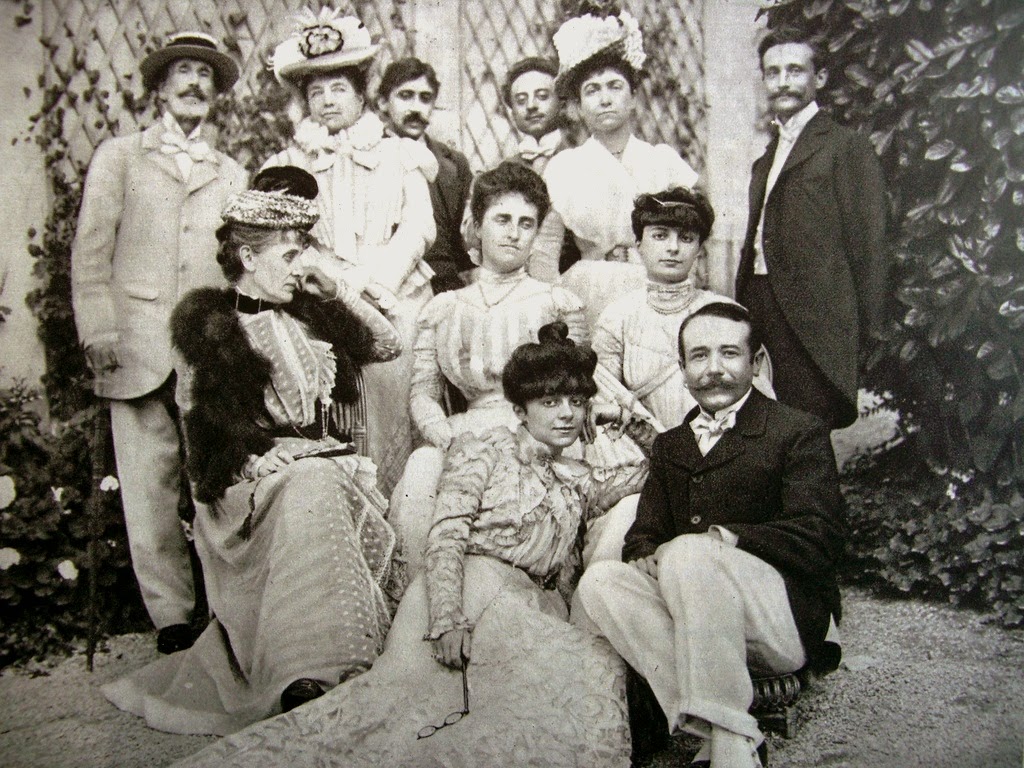 Engaging with her French literary heritage while drawing inspiration from Greek paganism and from Nietzsche’s radical thought, Noailles constructed an original poetic vision. Her poetry is marked by a tension between form and content: dynamic concepts and images strive to dissolve a largely classical structure. This tension reflects her position at the threshold between two opposing world views, nineteenth-century Romanticism and twentieth-century Modernism. Her work is best described as Dionysian: ecstatic, sensual, erotic, playful, sometimes violent, and always marked by a tragic undercurrent that becomes more pronounced in her later poetry.